AI LinkedIn Post Generator, Carousel Maker & Analytics Tool

Announcing partnerships on LinkedIn should be more than a way to name drop another brand or person.
When done well, they establish credibility, extend your reach, and set the tone for everything else that follows. Done wrong, they come off as hollow, too promotional or just confusing.
The difference is looking past the mechanics and focusing in on why your audience should care.
This guide will walk you through how to write partnership announcement posts on LinkedIn. The approach that works best with different sorts of collaborations, and what not to do when it comes to partnership announcements.
Announcing Partnerships on LinkedIn: Why it Matters
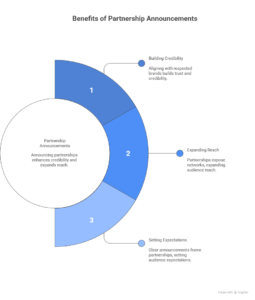
Partnership announcements serve three purposes:
- They establish credibility: When you align yourself with brands, thought leaders, or other organizations, it shows that others trust you. To do that, this social proof matters, especially when you are trying to get the attention of new reader audiences.
- They extend reach: When you announce a partnership, both parties introduce the other to different networks. You get seen by people who hadn’t known you existed.
- They manage expectations from the outset: Making sure there’s an announcement at all helps readyyour audience for the partnership. People know what’s going on and why, so the pairing feels less random when they’re joint creators or when people see future content together.
Partnerships, without an official announcement, can feel almost confusing or worse, like a transactional arrangement. Your audience could begin to wonder what’s changed, or why you’re suddenly collaborating with somebody new.
What Kind of Partnerships You Could Announce
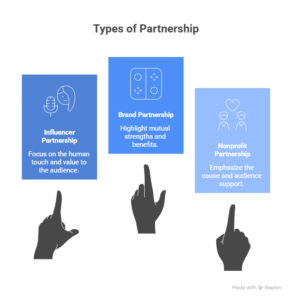
Not all partnerships are created equal, and you should adjust how you announce them accordingly.
- Influencer or thought leader partnerships: This is about the human touch. Those announcements need to share why this person you’re interviewing is a natural fit and how they will bring value to your audience.
- Brand to brand partnerships: This is where both can leverage their own strengths and overlap. Such an announcement should make it clear what both sides will bring to the table and why their union would be good.
- Brand nonprofit or cause based partnerships: This one calls for a more contemplative approach. Describe what the cause is, why it’s important to you and what your audience can do to support it.
And each one requires a slightly different response. Ensure the partnership post is authentic and relevant to your audience.
Deciding How to Make the Big Announcement
Some relationships require the gentle touch. Still others require a bold, coordinated liftoff.
Soft announcements: This tactic is great for smaller partnerships or ongoing relationships that don’t need attention right away. This could be a shout out, with a tag, or mention in your content, or just a hushed note in your newsletter. Five soft announcements also create flexibility and make it possible to build buzz gradually.
Big announcements: They make noise. These include static posts to coordinated timing with a buddy who is also posting. You can even use multimedia such as videos or carousels! Reserve this for your partnerships such as a product launch, a major collaboration or a strategic alliance that repositions your brand in the market.
The takeaway here: Not all relationships require fireworks. Save the huge announcements for partnerships that actually deserve to be noticed. Overhyping a small partnership might come back to bite you and lend your announcements less credibility over the long run.
How to Format a Partnership Announcement Post
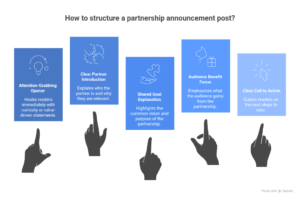
A great partnership announcement has the following:
Open with care: In your first line, grab readers by the lapels. Avoid using generic openers like “We are excited to announce…” and doing something that interests them or emphasizes value. For example: “Building [specific outcome] just got easier” or “We’ve been working on something you’ve asked for.”
Introduce the partner, explicitly: Don’t assume that everyone knows who you’re partnering with. Introduce them and explain why they matter. Even big (and famous) brands can use context that explains why this partnership is a good one.
Describe the joint purpose: What problem are you solving collectively? What vision connects you? This is where you demonstrate alignment and make the partnership feel purposeful versus transactional.
Focus on what’s in it for them: Don’t skimp here. Position the partnership in terms of what your audience will get like access, better services, exclusive content or special offers.
Finish with an explicit call to action: Tell people what to do next. For everyone who visits or click the link, there’s always a call to action or a “next step” of some kind,” one that might involve visiting another link, entering your email address somewhere or just following the partner.
Paid vs. Organic Partnerships on LinkedIn

The difference between paid and organic partnerships matters for compliance and also transparency.
Paid partnerships: This is when money, goods or services are exchanged for promotion. Paid partnerships require disclosure. For cases like this, LinkedIn has a “Paid Partnership” tag exactly for these kinds of situations and you should use it anytime money changes hands.
Organic partnerships: When it comes to natural partnership, there’re no money exchanging hands between the partners. These would still benefit from clear communication but would not necessarily require the same disclosure labels.
When in doubt, be open to honesty. If there is any form of compensation in your partnership, disclose it. The F.T.C. is among those who enforce disclosure rules, and failure to follow them can result in fines and other penalties.
LinkedIn provides you with tools to make this happen without a hitch. Use them. Both you and your audience are shielded by transparency.
Guidelines for LinkedIn Partnerships Posts
Here are five actionable suggestions to enhance partnership announcements:
- Always link your partner properly: Always include that company’s LinkedIn profile or, if appropriate, the company’s page. This will make a clickable link, and then they’ll get notified that you’ve posted and this will help their followers find out about the collaboration.
- Time the drops: When both partners drop around the same time, it boosts reach and adds momentum. Choose when you’ll publish ahead of time and stick to your schedule.
- Sound like a human being, not an institution: LinkedIn is for work, but your post shouldn’t sound like a press release. Write as though you were explaining something to a colleague, not like you are delivering a company memo.
- Comment together: If both partners comment on comments one another’s post, it indicates active participation and helps to keep the conversation going. This back and forth also informs LinkedIn’s algorithm that the post is appropriate to show to more people.
- When and where applicable, add visuals: Using images, videos or carousels can significantly boost engagement on partnership posts. A picture of both teams or a video that briefly explains said partnership gives it some personality, and stops eyeballs from passing by.
Common Mistakes to Avoid
Even when you mean well, partnership announcements can still come out wrong. Here are the most common mistakes people make:
- Sound too promotional in the post: Partnership announcements should not sound like ads. If your post reeks of a sales pitch rather than presenting something of value, then people will tune you out.
- Not defining the relationship: Don’t make them fill in the blanks about why you’re working together. Spell it out. Explain what you are solving and the vision you share.
- Forgetting the advantage of the audience: This is the largest mistake. If your audience can’t connect the dots on what they get out of this partnership, they won’t care.
- Omitting disclosure when it should be provided: If there’s money in your partnership, do disclose. Transparency isn’t a nice to have, and burying paid relationships erodes trust while creating legal jeopardy.
Final Thoughts
The announcements of partnerships are more than an administrative function. They’re relationship builders.
Done well, they introduce your audience to important partners, explain why those connections are significant and lay the groundwork for powerful work ahead.
The best partnership announcements feel authentic, direct and audience centric. They don’t just announce a collaboration — they make people care about it.
Think of partner posts as opportunities to develop trust, rather than simply distributing information. If you are open, clear and have something of worth, what you share will continue to vibrate long after that first post.